
Barnet University Hospital
Contact
Hours
- Monday: 9:00am – 9:00pm
- Tuesday: 9:00am – 6:00pm
- Wednesday: 9:00am – 9:00pm
- Thursday: 9:00am – 9:00pm
- Friday: 9:00am – 5:00pm

Barnet University Hospital, a leading healthcare institution located in New York, offers a comprehensive range of medical and dental services. This fictional hospital is renowned for its state-of-the-art facilities and commitment to providing high-quality care to all patients.
Medical Services
General Medicine and Surgery
- Emergency Services: Open 24/7, equipped with advanced life-saving technology.
- Inpatient and Outpatient Care: Comprehensive services including internal medicine, cardiology, neurology, orthopedics, and more.
- Surgical Specialties: General surgery, trauma surgery, minimally invasive procedures, and specialized surgical interventions.
Specialized Departments
- Oncology: Cutting-edge cancer treatment and research center.
- Pediatrics: Comprehensive care for infants, children, and adolescents.
- Women’s Health: Maternity services, gynecology, and reproductive health.
Dental Services
General Dentistry
- Routine Checkups and Cleanings: Preventive care to maintain oral health.
- Fillings and Restorations: Treatment of cavities and damaged teeth.
Specialized Dental Care
- Oral and Maxillofacial Surgery: Surgical extraction of teeth, removal of diseased tissue, and corrective jaw surgery.
- Orthodontics: Braces and other orthodontic treatments for children and adults to correct dental alignment and bite issues.
- Pediatric Dentistry: Specialized dental care for children, including preventive treatments like sealants and fluoride applications.
- Periodontics: Treatment of gum disease and other conditions affecting the tissues surrounding the teeth.
- Prosthodontics: Replacement of missing teeth with crowns, bridges, dentures, and dental implants.
Crowns
Crowns, also known as dental caps, are restorations placed over damaged, decayed, or severely worn teeth to restore their shape, size, strength, and appearance. They are custom-made to fit snugly over the entire visible portion of a tooth above the gum line, providing comprehensive protection and durability. Crowns can be made from various materials, including porcelain, ceramic, metal, or a combination of these, allowing them to blend seamlessly with natural teeth or provide added strength.
Benefits of Crowns
- Restoration of Function: Crowns restore the functionality of a tooth, allowing for normal biting, chewing, and speaking.
- Aesthetic Improvement: Crowns can improve the appearance of teeth that are discolored, misshapen, or misaligned, enhancing your smile.
- Protection: They protect weak or cracked teeth from further damage and help prevent breakage.
- Durability: Crowns are durable and can last many years with proper care, making them a long-term solution for dental restoration.
- Comfort: They provide a comfortable fit and feel like natural teeth, allowing for easy adaptation and minimal discomfort.
When Crowns Are Needed
- Severe Tooth Decay: When a tooth is too decayed for a filling, a crown can provide the necessary support and protection.
- Broken or Fractured Teeth: Crowns can hold together parts of a cracked tooth and prevent further damage.
- After Root Canal Therapy: Following a root canal, a crown can protect the treated tooth and restore its function.
- Large Fillings: If a tooth has a large filling that weakens its structure, a crown can provide additional strength.
- Cosmetic Enhancement: Crowns can cover misshapen or severely discolored teeth, improving overall appearance.
- Dental Implants: Crowns are placed over dental implants to replace missing teeth, providing a natural look and function.
Maintaining Dental Crowns
- Good Oral Hygiene: Brush your teeth at least twice a day and floss daily to keep your crowns and surrounding teeth clean.
- Regular Dental Checkups: Visit your dentist regularly for checkups and professional cleanings to ensure your crowns remain in good condition.
- Avoid Hard Foods: Refrain from biting down on hard objects like ice, hard candy, or fingernails to prevent chipping or damaging the crown.
- Use a Night Guard: If you grind your teeth at night, wear a night guard to protect your crowns from excessive wear.
- Avoid Staining Agents: Limit consumption of staining foods and drinks, such as coffee, tea, red wine, and tobacco, to keep your crowns looking their best.
Crowns are a versatile and effective solution for many dental issues, offering both functional and aesthetic benefits. With proper care and maintenance, they can provide long-lasting protection and significantly improve your dental health and smile.

Implants
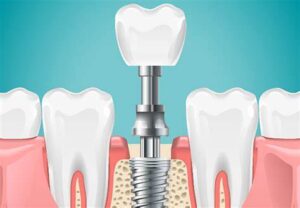
Dental implants are sophisticated dental devices used to replace missing teeth. They are composed of three main components:
- Implant Fixture: This is a small, screw-shaped post typically made of titanium, a biocompatible material that fuses with the jawbone through a process called osseointegration. The implant fixture serves as the artificial tooth root and provides a stable foundation for the replacement tooth or teeth.
- Abutment: The abutment is a connector piece that attaches to the implant fixture and protrudes above the gumline. It serves as the attachment point for the final dental restoration, such as a crown, bridge, or denture.
- Dental Restoration: This is the visible part of the dental implant that resembles a natural tooth. It can be a single crown to replace a single missing tooth, a bridge to replace multiple adjacent teeth, or a denture to replace an entire arch of missing teeth. Dental restorations are custom-made to match the color, size, and shape of the patient's natural teeth for a seamless and aesthetic result.
The process of receiving dental implants typically involves several steps:
- Consultation and Planning: The patient undergoes a comprehensive dental examination, including X-rays, CT scans, and impressions, to assess their oral health and determine if they are a suitable candidate for dental implants. The dentist or oral surgeon develops a customized treatment plan based on the patient's specific needs and goals.
- Implant Placement: During a surgical procedure performed under local anesthesia or sedation, the implant fixture is precisely placed into the jawbone at the site of the missing tooth or teeth. The gum tissue is then stitched closed, and the implant is left to heal and integrate with the jawbone over several months.
- Abutment Placement: Once the implant has fully integrated with the jawbone, a second minor surgery may be performed to expose the top of the implant and attach the abutment. Alternatively, some implant systems allow for the abutment to be placed at the time of implant placement, eliminating the need for a second surgery.
- Dental Restoration: After the abutment is in place, impressions are taken to create a custom-made dental restoration. The final restoration is then attached to the abutment, completing the dental implant treatment.
Dental implants offer numerous advantages over traditional tooth replacement options, including:
- Natural Appearance: Dental implants closely mimic the look and feel of natural teeth, providing a seamless and aesthetically pleasing smile.
- Durability: With proper care, dental implants can last a lifetime, making them a long-term solution for tooth loss.
- Improved Function: Dental implants restore chewing function, speech clarity, and bite stability, allowing patients to eat a wide variety of foods with confidence.
- Preservation of Jawbone: By stimulating the jawbone, dental implants help prevent bone loss and maintain facial structure and appearance.
- Comfort and Convenience: Unlike removable dentures, dental implants are permanently fixed in the mouth, eliminating the need for adhesives and discomfort associated with loose or ill-fitting prosthetics.
Overall, dental implants are considered the gold standard in tooth replacement dentistry, offering patients a reliable, durable, and natural-looking solution for missing teeth. However, not everyone is a suitable candidate for dental implants, and factors such as oral health, bone density, and overall health must be considered before undergoing implant treatment. It is essential to consult with a qualified dentist or oral surgeon to determine the best tooth replacement option for individual needs and circumstances.