
Touro College of Dental Medicine
Contact
Hours
- Monday: 9:00am – 9:00pm
- Tuesday: 9:00am – 6:00pm
- Wednesday: 9:00am – 9:00pm
- Thursday: 9:00am – 9:00pm
- Friday: 9:00am – 5:00pm

Touro College of Dental Medicine, located in New York, New York, is a distinguished institution dedicated to providing exceptional dental education, advancing research in the field of dentistry, and delivering compassionate patient care. As a leading dental school, we are committed to preparing competent and compassionate dental professionals who will serve their communities with integrity and excellence. Our faculty comprises esteemed educators and researchers who are passionate about fostering the next generation of dental leaders and advancing oral health for all.
Educational Programs
Dental Degree Programs
- Doctor of Dental Surgery (DDS): Comprehensive program designed to provide students with a solid foundation in dental science, clinical skills, and professional ethics.
- Advanced Dental Education: Postgraduate programs offering specialized training in areas such as orthodontics, periodontics, endodontics, and oral surgery.
Continuing Education
- Professional Development: Continuing education courses and seminars for practicing dentists to enhance their clinical skills, stay updated on the latest advancements in dental research, and meet licensure requirements.
- Specialized Training: Advanced training programs for dental specialists seeking to further develop their expertise in specific areas of dentistry.
Clinical Services
Patient Care
- Comprehensive Dental Care: Range of preventive, restorative, and cosmetic dental services provided by faculty-supervised students and experienced dental professionals.
- Specialty Care: Specialized treatment options for complex dental conditions, including orthodontics, periodontics, endodontics, and oral surgery.
Community Outreach
- Public Health Initiatives: Collaborative efforts with community organizations to promote oral health education, provide dental screenings, and deliver preventive services to underserved populations.
- Community Service: Participation in outreach programs and volunteer initiatives to address the oral health needs of underserved communities and improve access to dental care.
Research and Innovation
Scientific Inquiry
- Translational Research: Conducting cutting-edge research to translate scientific discoveries into clinical applications for improved patient care and outcomes.
- Interdisciplinary Collaboration: Collaborating with other academic institutions and research centers to advance knowledge in various areas of dental science and medicine.
Touro College of Dental Medicine is dedicated to excellence in dental education, research, and patient care, serving the needs of individuals and communities in New York and beyond. Through our commitment to academic excellence, clinical innovation, and community engagement, we strive to make a positive impact on oral health and well-being for generations to come.
Hutchinson's Incisors and Mulberry Molars
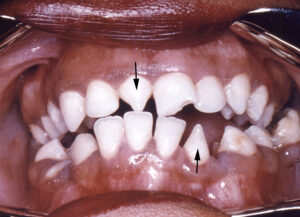
Hutchinson's incisors and mulberry molars are dental abnormalities that are characteristic features of congenital syphilis, a sexually transmitted infection caused by the bacterium Treponema pallidum, which can be transmitted from an infected mother to her fetus during pregnancy. These dental anomalies are named after the British surgeon Sir Jonathan Hutchinson, who first described them in the late 19th century.
- Hutchinson's Incisors: These are a type of abnormality affecting the incisor teeth. Hutchinson's incisors are typically smaller and more widely spaced than normal incisors. They also have a screwdriver-shaped appearance, with notches or grooves along the biting edges.
- Mulberry Molars: Mulberry molars are another dental abnormality associated with congenital syphilis. They affect the molars, causing them to have a rough, irregular surface resembling a mulberry fruit. This irregularity can make chewing difficult and may lead to premature wear of the teeth.
It is crucial to get treated for congenital syphilis and to address these dental abnormalities for several reasons:
- Early Detection of Congenital Syphilis: Hutchinson's incisors and mulberry molars can serve as diagnostic indicators of congenital syphilis. Identifying these dental abnormalities in a child's teeth can prompt healthcare providers to investigate further for other signs of congenital syphilis, such as skin rashes, bone abnormalities, or neurological symptoms.
- Prompt Treatment: Congenital syphilis, if left untreated, can lead to serious health complications, including developmental delays, vision or hearing loss, bone deformities, and even death. Early detection and treatment of the infection can prevent or mitigate these complications.
- Dental Health: Addressing Hutchinson's incisors and mulberry molars is essential for the child's dental health and overall well-being. These dental abnormalities can cause difficulties with eating, speaking, and proper oral hygiene. Treatment may involve dental procedures such as fillings, crowns, or extractions to restore function and aesthetics.
- Prevention of Transmission: Treating congenital syphilis in affected infants can prevent further transmission of the infection to others. Prompt treatment of the mother during pregnancy can also prevent the transmission of syphilis to the fetus in the first place.
In summary, Hutchinson's incisors and mulberry molars serve as important diagnostic clues for congenital syphilis, highlighting the need for prompt diagnosis and treatment to prevent serious health consequences and ensure the child's overall well-being.
Root Canal Therapy
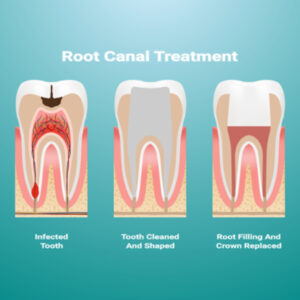
Root canal therapy, also known as endodontic treatment, is a dental procedure performed to treat infected or damaged tooth pulp, which is the soft tissue located inside the tooth's root canal. The goal of root canal therapy is to save the natural tooth and alleviate pain and discomfort caused by infection or inflammation.
Here's an overview of root canal therapy and its key aspects:
- Indications for Root Canal Therapy:
- Severe tooth decay that has reached the inner layers of the tooth, including the pulp.
- Dental trauma or injury that has caused damage to the tooth pulp.
- Infection or inflammation of the tooth pulp, often resulting in symptoms such as persistent toothache, sensitivity to hot or cold foods, swelling, or abscess formation.
- Procedure:
- Diagnostic Evaluation: The dentist begins by examining the affected tooth and may perform diagnostic tests, such as X-rays, to assess the extent of damage to the tooth pulp.
- Anesthesia: Local anesthesia is administered to numb the tooth and surrounding tissues, ensuring the patient's comfort throughout the procedure.
- Access and Cleaning: The dentist creates a small opening in the crown of the tooth to access the infected or inflamed pulp tissue. Specialized instruments are used to remove the diseased pulp and thoroughly clean the root canal system.
- Shaping and Disinfection: The root canal is shaped and irrigated with antimicrobial solutions to eliminate bacteria and disinfect the inner chamber of the tooth.
- Filling: Once the root canal is cleaned and disinfected, it is filled with a biocompatible material called gutta-percha to seal the space and prevent reinfection.
- Restoration: Depending on the extent of tooth structure lost to decay or damage, a dental crown or filling may be placed on the tooth to restore its strength, function, and appearance.
- Benefits of Root Canal Therapy:
- Pain Relief: Root canal therapy effectively alleviates tooth pain and discomfort associated with pulp inflammation or infection.
- Preservation of Natural Tooth: By removing the infected or damaged pulp and sealing the root canal, root canal therapy allows patients to retain their natural tooth rather than resorting to extraction.
- Prevention of Spread of Infection: Root canal therapy helps prevent the spread of infection to surrounding teeth, gums, or jawbone, reducing the risk of more extensive dental problems.
- Restoration of Function: Following root canal treatment and restoration, the tooth can function normally for biting, chewing, and speaking.
- Post-Treatment Care:
- Patients may experience mild discomfort or sensitivity for a few days following root canal therapy, which can typically be managed with over-the-counter pain medication.
- Good oral hygiene practices, including regular brushing, flossing, and routine dental check-ups, are essential to maintain the health of the treated tooth and surrounding tissues.
- Avoiding hard or sticky foods and habits like chewing on ice or using teeth as tools can help prevent damage to the restored tooth.
In summary, root canal therapy is a valuable dental procedure that can save a tooth from extraction and relieve pain caused by infection or inflammation of the tooth pulp. With modern techniques and advancements in dental technology, root canal treatment is a safe, effective, and predictable way to preserve natural teeth and restore oral health and function.